
What Is Battery Heat Sealing & How To Eliminate Common Sealing Defects
Article Overview
Battery heat sealing is an indispensable core process for manufacturing PP housing lead-acid and industrial batteries. Poor sealing will directly trigger electrolyte leakage, casing corrosion and premature battery scrapping, bringing huge hidden dangers to product safety and heavy losses including defective goods and product recalls.
This article systematically sorts out the working principle of battery heat sealing, typical sealing defects, root causes and standardized prevention solutions, and launches our flexible full-series battery heat sealing equipment line, covering all mainstream battery categories and full capacity ranges without upper limit, helping battery manufacturers stabilize production yield and cut production costs.
1. Basic Principle & Importance of Battery Heat Sealing
Battery heat sealing adopts precise constant temperature heating plus constant pressure extrusion to melt and fuse the PP plastic edges of battery case and cover, forming an airtight integrated seal to fully isolate internal electrode groups and electrolyte from external air.
Unlike other assembly processes, heat sealing quality determines the whole service life and safety of finished batteries:
- Failed sealing creates tiny gaps, causing slow electrolyte leakage;
- Leaked electrolyte corrodes metal terminals and surrounding equipment;
- Long-term leakage will drastically reduce battery capacity and trigger safety risks.
For all personnel engaged in battery production, quality inspection and after-sales maintenance, mastering standardized heat sealing technology is a must for stable product quality.
Although the operation flow looks simple, the final sealing effect relies on precise coordination of four core factors: heating temperature, sealing pressure, heat preservation time and raw material state. Any parameter exceeding the standard range will form irreversible sealing defects.
2. Four Most Common Battery Heat Sealing Defects
2.1 Incomplete Fusion
The most frequent defect. The PP material of case and cover cannot be fully fused, leaving invisible micro gaps. Leakage problems will not appear immediately after production but gradually emerge during storage or vehicle use, leading to mass after-sales complaints.
2.2 Thermal Deformation
Excessively high temperature or prolonged heating softens PP plastic, resulting in warped, deformed battery shells and loose sealing seams. On the contrary, insufficient heating leads to weak bonding seams that crack under slight collision or vibration.
2.3 Surface Contamination Weld Failure
Dust, oil stains and chemical residues attached to sealing surfaces will form isolation layers and block uniform fusion. Even tiny particles can destroy the airtightness of the whole seal.
2.4 Uneven Pressure Shrinkage Crack
Unbalanced pressure distribution during heating or cooling makes PP materials shrink at different speeds. The seal looks intact off the production line but separates under actual working vibration and temperature changes.
3. Root Causes of Sealing Failure
We summarize all influencing factors behind defective sealing from equipment, process, raw materials and workshop environment:
- Uneven heating of heating plates: Local overheating or low temperature causes inconsistent melting degree of plastic; a temperature deviation of only several degrees will ruin sealing quality.
- Misalignment of battery case and cover: Offset placement leads to uneven pressure on welding seams and weak bonding points.
- Aging & dirty molds: Worn or residual plastic-stained molds reduce heat transfer efficiency and press deformities on battery housings.
- Mismatched process parameters: One-size-fits-all temperature, pressure and heating time cannot fit different battery sizes and PP material formulas.
- Unstable workshop environment: Drafts and fluctuating ambient temperature change cooling speed and weaken sealing strength.
- Raw material defects: Uneven thickness or poor corrosion resistance of PP plastic layers directly damages sealing performance.
4. Standardized Solutions to Prevent Sealing Defects
4.1 Optimize Standard Heat Sealing Parameters
Industry standard reference for PP material heat sealing:
- Heating temperature: ≥172°C
- Sealing pressure: 0.4–0.8 MPa
- Heat sealing time: 3–6s Regularly calibrate heating plates to keep temperature fluctuation within ±2°C.
4.2 Adopt Automatic Positioning Equipment
Equip photoelectric sensing positioning system to realize fully automatic alignment of battery case and cover before heating, completely eliminate manual offset errors and evenly distribute pressure on welding seams.
4.3 Strict Daily Equipment Maintenance
Clean molds regularly to remove plastic residues and surface contaminants; inspect heating elements regularly and replace aging parts in time to guarantee stable output of temperature and pressure.
4.4 Complete Full-Range Quality Inspection System
- Online real-time temperature monitoring via infrared sensors;
- Random pressure decay leak test before finished batteries leave the factory;
- Microscopic cross-section inspection of sealing seams to check continuous fusion layers.
4.5 Stabilize Production Workshop Environment
Control workshop dew point below -40°C and maintain stable humidity to avoid moisture absorption of PP plastic, which greatly improves sealing consistency.
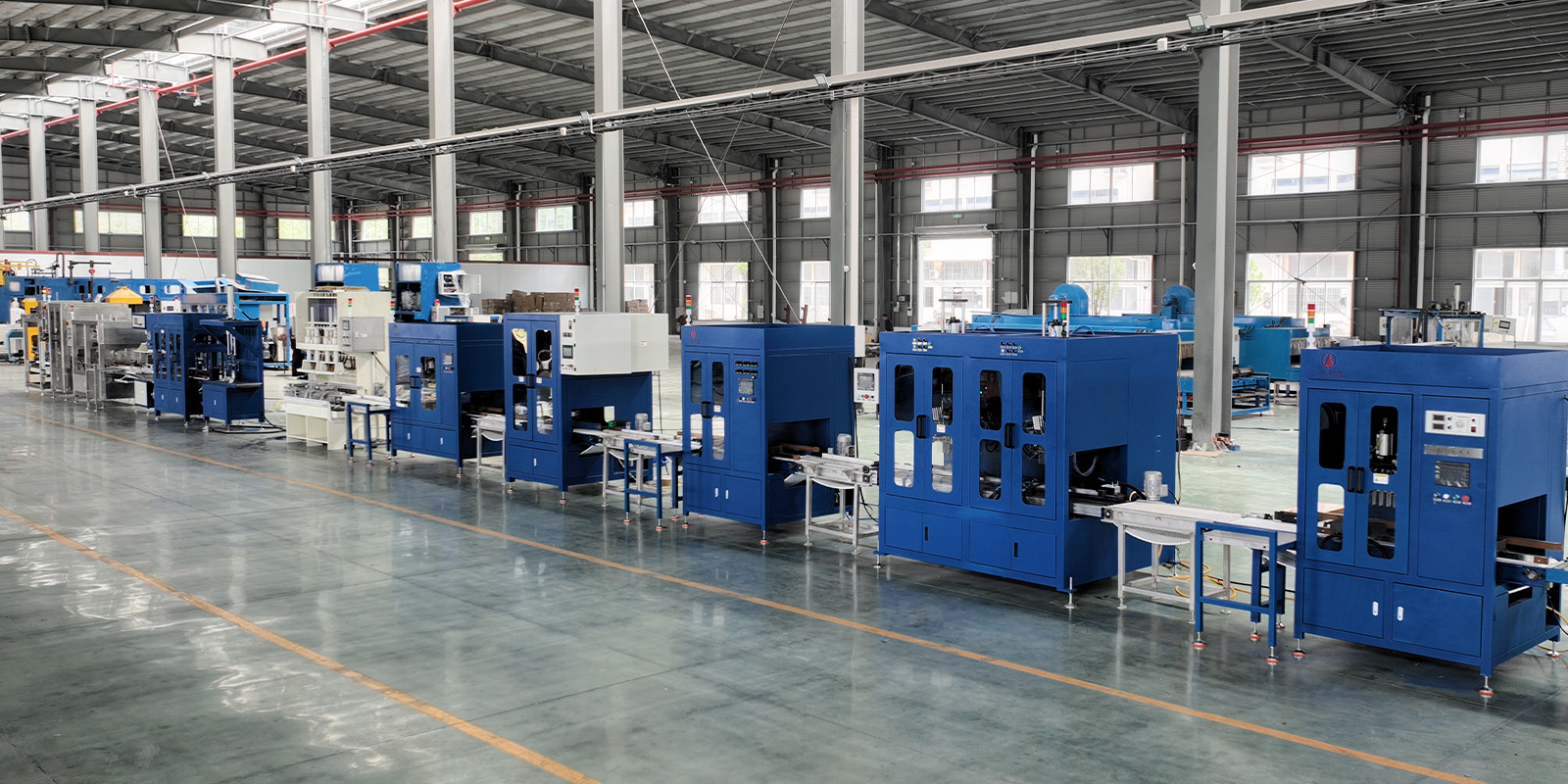
5. Full-Series Flexible Battery Heat Sealing Equipment Solution
Most standard heat sealing machines only support single battery type or limited capacity range, which forces manufacturers to purchase multiple sets of separate equipment when expanding product lines, raising equipment investment and workshop space costs. We independently developed a full-series flexible battery heat sealing equipment line, compatible with all mainstream battery categories, covering full capacity specifications from small miniature batteries to large-capacity industrial storage batteries with no upper capacity limit, perfectly matching diversified production demands of integrated battery manufacturers.
Wide Application Coverage
- Lead-acid batteries: Motorcycle batteries, electric vehicle batteries, automotive start-stop batteries, large stationary energy storage batteries with unlimited capacity;
- Lithium & sodium-ion plastic shell batteries: Auxiliary power batteries for new energy vehicles, small & large industrial storage batteries;
- All PP plastic housing battery products covering low, medium and super-high capacity segments.
Core Equipment Advantages
- Uniform temperature aluminum alloy heating plate, effectively solving the core problem of uneven heating;
- Built-in photoelectric automatic positioning sensor, zero offset of battery case and cover, stable sealing airtightness;
- Modular quick-change mold structure, one machine compatible with hundreds of battery models, switch different battery categories & specifications without production line downtime;
- Stable heavy-duty hardware configuration: A3 steel frame, Mitsubishi PLC + HMI intelligent touch control, high-standard pneumatic components;
- Customized production capacity design: We tailor the machine’s hourly output, layout and automation level according to customers’ actual production demands, matching small pilot workshops, medium batch lines and large-scale fully automatic factories;
- Flexible parameter storage function: Pre-store exclusive heat sealing formulas for lead-acid, lithium and sodium batteries, one-click switching production modes.
This full-series heat sealing machine eliminates the need for multiple independent equipment purchases. Manufacturers only need one set of equipment to complete mass production of all self-operated battery products, greatly cutting equipment procurement costs, reducing workshop footprint and simplifying daily equipment maintenance. It efficiently lowers sealing defective rate, cuts after-sales recall costs and realizes long-term stable high-yield multi-product mixed production.
Conclusion
Stable battery heat sealing quality is the core competitiveness of battery manufacturers. Standardized process control, standardized workshop management and matched professional heat sealing equipment are three essential conditions to eliminate sealing defects.
Our team provides one-stop supporting solutions including flexible full-series heat sealing equipment, matched PP raw material formulas and whole factory production line layout planning for global battery manufacturers, helping enterprises realize low-defect, multi-category and high-efficiency integrated battery production.